May 23, 2440 – 08:20 AM
By Leila Carson, for Frontline Earth
Yesterday I spent the day in a truck with a father, his daughters, their son, and a clipboard. It started before dawn. There was no interview scheduled, no prep session. Just boots on the ground and a reminder to keep up.
Rayya Chakrobarty is the warden for the east district of the Marmaduke Freehold. That’s not an official title, but it’s the one everyone uses. His job is to inspect the safehouses, make sure no one is suffering, and get families where they need to go. It is logistics, not charity. There is no appeal process, no permanent shelter at the first stop. Each safehouse is a waypoint in a broader system that exists to assess, stabilize, and decide whether someone can stay.
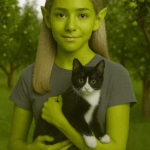
Rayya doesn’t do this work alone. He brought three of his children: Claudia, Buella, and Nabi. All teenagers. All trained. By 06:30, they were feeding goats, pulling laundry, checking inventory, and loading crates into the back of the truck. By 07:00, we were on the road with hot food containers and an inspection checklist. I brought a notebook. They brought breakfast samosas and fried rabbit. They also brought Jack, a thick-coated dog with a steady stare and a low, protective tail wag.
The first house sat back off a county road near the edge of district power reach. It looked plain from a distance, a three-room modular unit with sealed windows, insulated siding, and a steep shed roof for snow runoff. The exterior was clean. Panels on the east side fed a battery wall tucked under the eaves. A small wind turbine behind the shed fed into the main grid. There was nothing quaint about it.
No fences. No signage. The only indicator it was active was the coded lock on the front panel, just above the palm reader. There were no cars outside. Inside, the air held the scent of bleach and pine cleaner, fresh enough to confirm it had been used recently but not abused. The ash bin had been emptied. The linens were folded and sealed in airtight tubs.
“Someone was here in the last forty-eight,” Claudia said, checking the logbook and holding up a folded rag. “No damage. No excess trash.”
The place had been occupied, but respectfully so. Nothing stolen. No systems tampered with. It would go back on quiet status until the next family needed it.
The next safehouse was different.
A girl, maybe fourteen, was standing near the door with her pack already on. Her hands were clean. A mop sat rinsed and leaned upright by the rail. She didn’t ask if she could come with us. She just did. The boy beside her was younger and walked the way boys do when they’ve been taught to protect but know they’re not old enough yet. Neither of them had names to give. Not yet. The Freehold doesn’t ask right away. Getting there is proof enough.
They were quiet. Rayya didn’t push them. He rarely spoke unless he had something to say. His daughters took their cues from that. Claudia checked the rear locks. Buella ran inventory. Nabi handed out fresh food and gave Jack a scratch behind the ears. The dog settled in beside the girl without waiting for permission.
“She’s his kind of people,” Claudia said, then went back to the logbook.
We rode in silence for a while. Then the stories came out. Not about politics or policy. Just the everyday work of survival. The girls talked about morning chores, about egg collection, about how they still carry long hoes because snakes are faster than boots. Rayya drank coffee in slow sips and kept his eyes on the road.
At one of the later stops, a Russian family had arrived sometime during the night. A mother, father, three boys, and a teenage girl with a limp that was starting to fester. The house wasn’t equipped for triage, but it was stocked. Claudia saw the swelling first. Buella cut the girl’s jeans with clean scissors. Rayya called the clinic. They didn’t debate it.
The ambulance arrived six minutes later. The family was fed, dressed, and told where to wait. The girl would be treated. The parents would be registered later. Rayya spoke to them in Russian. The kids translated where needed. They did not ask the family what they had left behind. The only question was what help they needed now.
I asked Claudia later what happens if someone lies to them.
“We let them,” she said. “If they’re not a danger to anyone, it doesn’t matter. People lie when they’re scared. We judge them by what they do here, not what they did before.”
Rayya confirmed it. The Freehold doesn’t file warrants. They don’t run background checks unless someone flags in the system. If a family crosses the threshold peacefully, does the work, respects the house, and cares for their own, they’re treated like neighbors.
I asked who pays for all of it. The buildings. The food. The medical transport. The security.
He said the funding comes from three places. The Freehold itself, the Marmaduke Trust, and Matt’s personal accounts. Some properties belong to the Trust, some to Freehold Inc, and others to Matt directly. In this district, Rayya manages all three without distinction. If a safehouse needs repairs, it gets them. If it needs to be mothballed for a month due to security concerns, it is taken offline without discussion.
These are not shelters built for comfort. They are built for durability, discretion, and fast turnover. They are inspected weekly. Inventory is logged digitally and by hand. Each site has its own internal cache of supplies, including food, clothing, and basic medical aid. They are not advertised. Word of them travels by hand-drawn maps, passed between trusted couriers and underground networks stretching back to the labor camps and brothels of Memphis and beyond.
Every house has two goals. Keep people alive. Keep people moving.
Some stay longer. Some are assigned community work in nearby towns. Some are placed under direct review. But most move on. Most are given a new name and a new chance.
Rayya has overseen somewhere between 120 and 150 arrivals over the past five years. His daughters have assisted with most of them. When I asked if it ever gets easier, Buella just said, “It shouldn’t.”
As we drove back toward the center of the district, Claudia pointed out which turbines were off-grid and which were shared with nearby towns. Nabi read out the next supply list. Jack snored against the door. Rayya said they had two more stops tomorrow and that some of the other wardens were getting behind.
There is no glamour in this work. No public speeches. No press releases. Just kids who wake up early, fix what is broken, and help strangers into trucks without ceremony.
The Freehold doesn’t ask for your papers. It asks if you’re hungry. If you’re hurt. If you’ll work. And then it shows you what it means to be part of something that functions.
In a world full of performances, this is what it looks like when people just do the job.
And that, too, is a kind of grace.